The Journey of Learning Multiple Languages
I learn languages out of pure curiosity: I love discovering new cultures, understanding how languages work, and being able to talk with people from different countries. It also brings clear benefits to the brain — better memory, sharper thinking, and a more open mind.
The practical side is weaker because English is spoken almost everywhere, but not completely (Arabic, French, German, Spanish, Portuguese, Russian, and Chinese are still important). Knowing the local language makes travel much better.
My goal is to reach CEFR B level in below's seven major languages. I already have A level in five of them. Progress feels very slow at the start, but once you build up vocabulary and patterns, it gets faster and easier — that is exactly what I feel now.
I am a native speaker of Chinese (Cantonese and Mandarin) and speak English as a second language.
- Chinese: is the most spoken language in the world because of China’s large population and long history. Its grammar is quite simple, but it has thousands of characters to learn and is tonal. Cantonese is often called one of the hardest because it has more tones.
- English: is today’s global language. Many people say it is one of the easier big languages. It has no grammatical gender, almost no noun cases, and flexible word order. But it also has many irregular verbs, tricky spelling, and lots of idioms.
Spanish was my first foreign language and opened the door to others. After that I learned French, Italian, Portuguese, and German. Right now I am focusing on Japanese and Korean. The more languages I learn, the more shared patterns I notice. Most advice says not to learn many languages at the same time, but once you reach a certain point — with good tools and understanding of language families — learning several together becomes more effective.
- French: Beautiful nasal sounds and many silent letters (like final -s, -t, -d, -x). One of the six UN official languages and spoken officially in more than 28 African countries.
- German: Complicated grammar with three genders and four cases, but easy to pronounce. Spoken in rich countries like Germany, Austria, Switzerland, Luxembourg, Liechtenstein, and Belgium. Famous for very long compound words.
- Italian: Pleasant rhythm and clear, predictable pronunciation. Italy is famous for fashion (Armani, Gucci, Prada), cars (Ferrari, Lamborghini), design, and food.
- Spanish: I found it the easiest among the Romance languages. Very clear pronunciation, grammatical gender, and special upside-down question and exclamation marks (¿ ¡). One of the six UN official languages with huge reach in Latin America and the United States.
- Portuguese: Sounds a bit like Spanish but with more nasal vowels and connected speech. Shares many words with Spanish. Official language of Brazil, so widely spoken worldwide.
- Japanese: Borrows many words from Chinese and English, which helps me as a Chinese speaker. Uses Subject-Object-Verb order, different from most European languages. Japan exports a lot of culture: anime, manga, games. The beginning feels easy, but verb forms get complicated later.
- Korean: Also uses Subject-Object-Verb order and borrows many words. Hangul writing system is logical and well-designed, but sound changes (especially with numbers) can be tricky. Growing global influence through K-pop, dramas, and beauty products.
I use Duolingo every day. It is not perfect — sometimes the path is too strict and some exercises feel strange — but the gamification and spaced repetition keep me motivated. Doing 10–20 minutes in the morning and evening with spare time works well. For me, Duolingo is a helpful daily habit rather than the only tool I need.
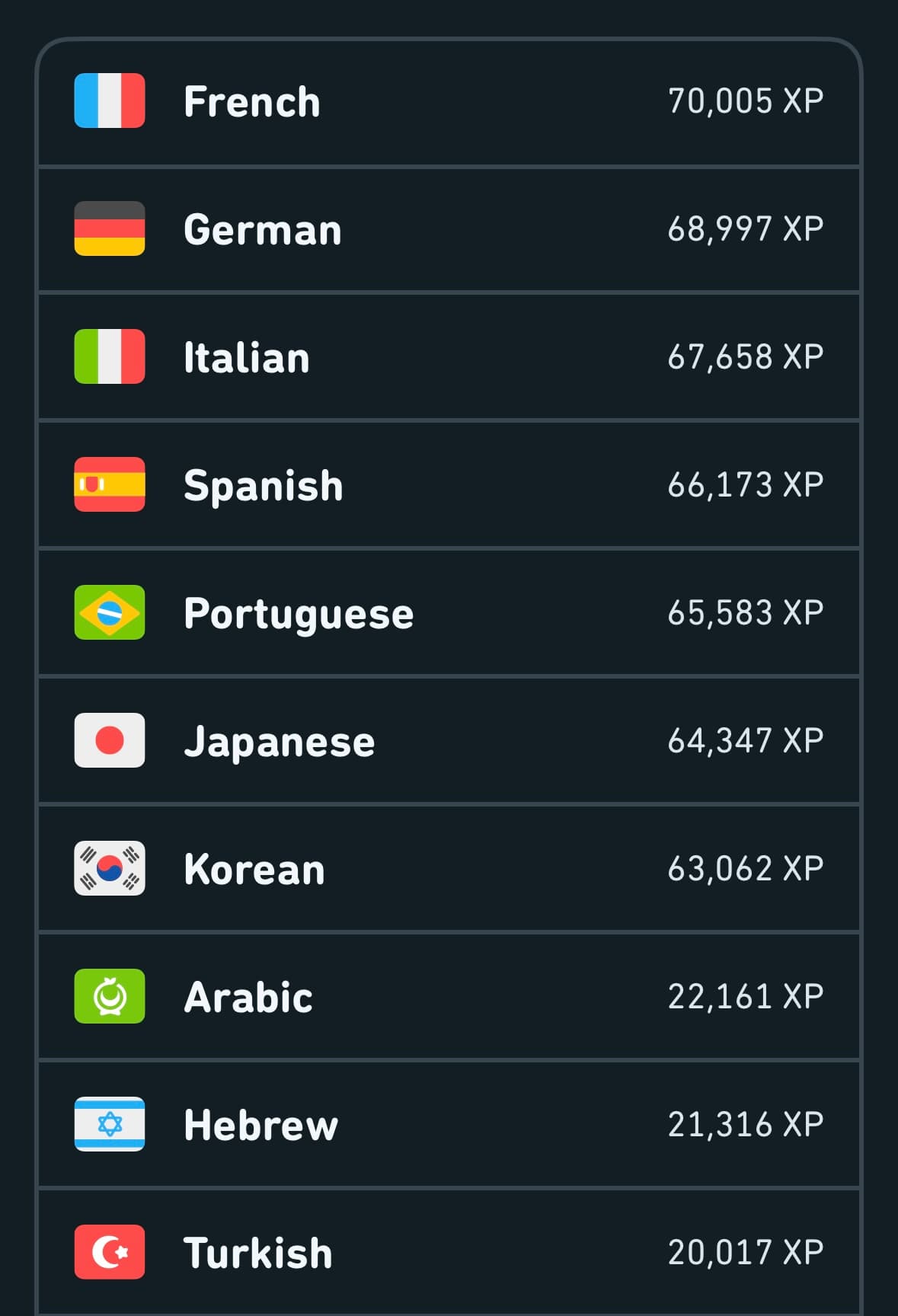
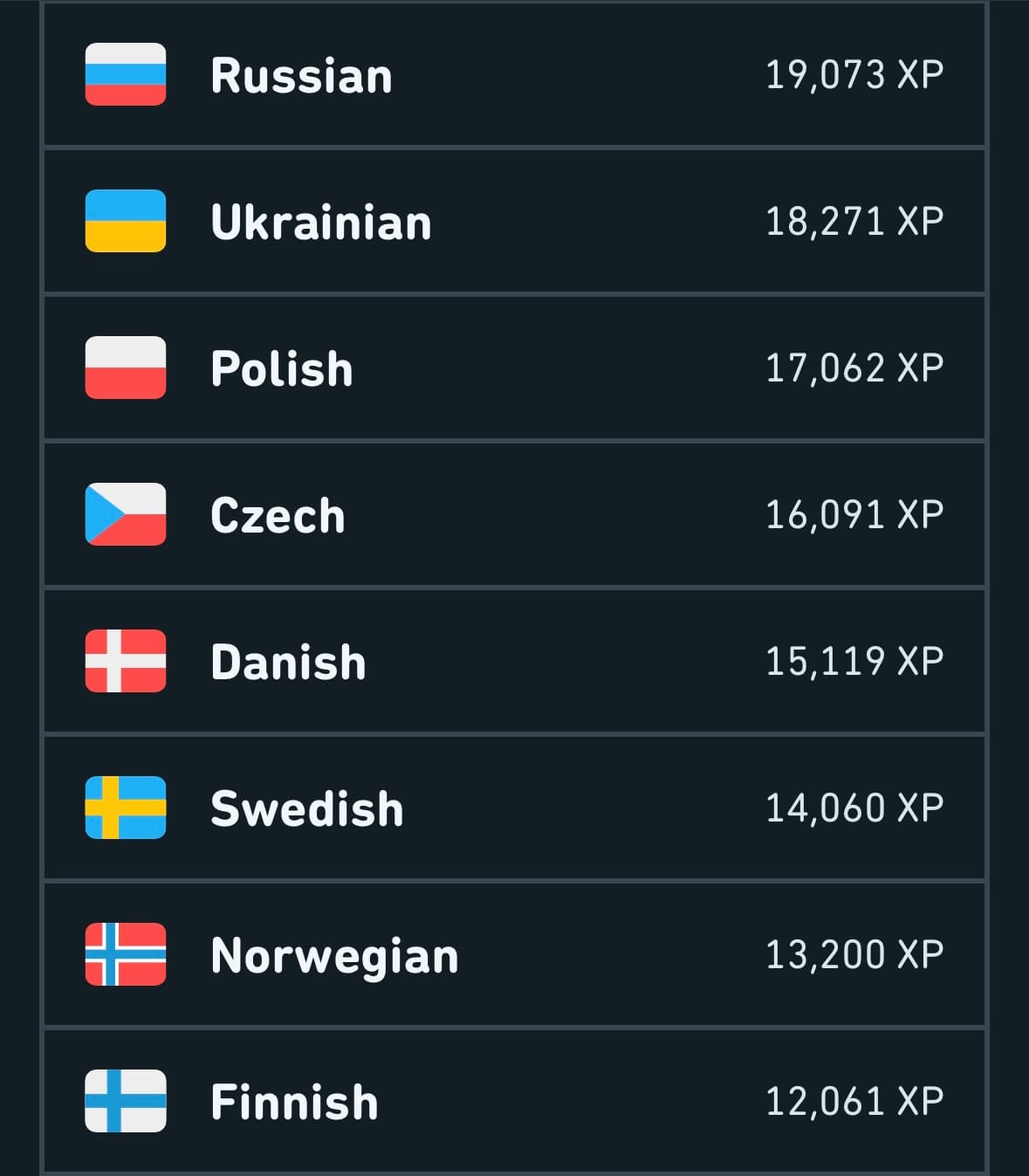
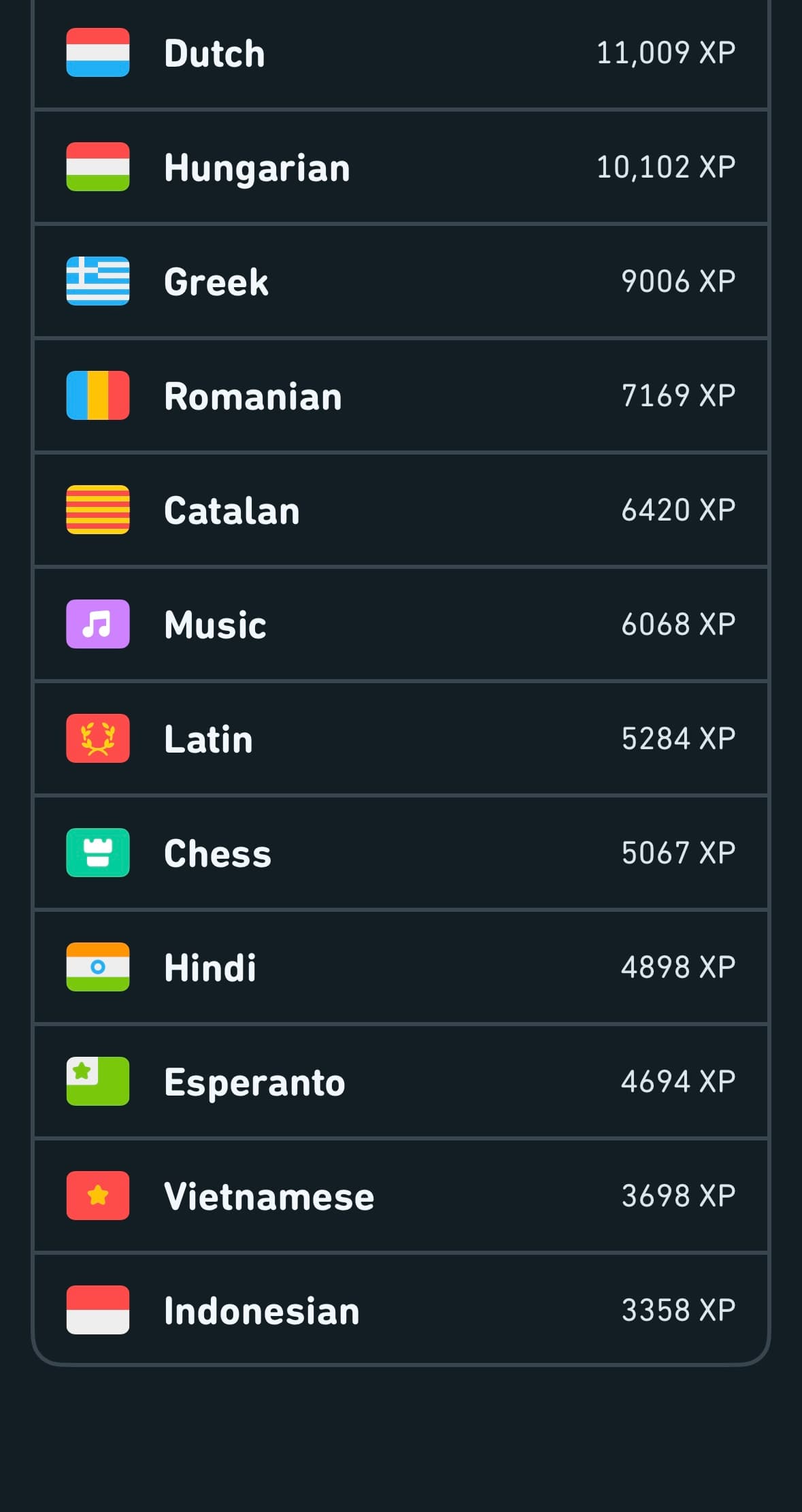
I still take in-person classes because they help me stay on track. Self-study works for some people, but structured lessons suit me better.
I’ll soon be sharing more about how I use customized AI tools as my primary method for language learning, why I believe Duolingo falls short, and what I consider essential for truly mastering a new language.
Language learning gives small rewards at first but huge benefits over time. There are no shortcuts — you have to build skill step by step. I use short pockets of free time instead of long study sessions.
Learning languages keeps opening new doors and making the world feel bigger and closer.